
New type of inhibitor could help tackle resistance against ‘last-resort’ antibiotics
Researchers from the Ineos Oxford Institute for antimicrobial research (IOI) have identified a new class of molecule that could help protect ‘last-resort’ antibiotics from bacterial resistance, and reduce the amount of antibiotics needed to treat infections by up to 32 times.
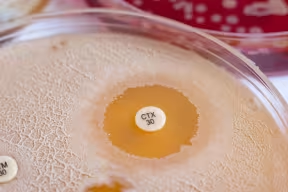
Antibiotic susceptibility testing in a petri dish. Credit: Mohammed Al Ali, Getty Images.

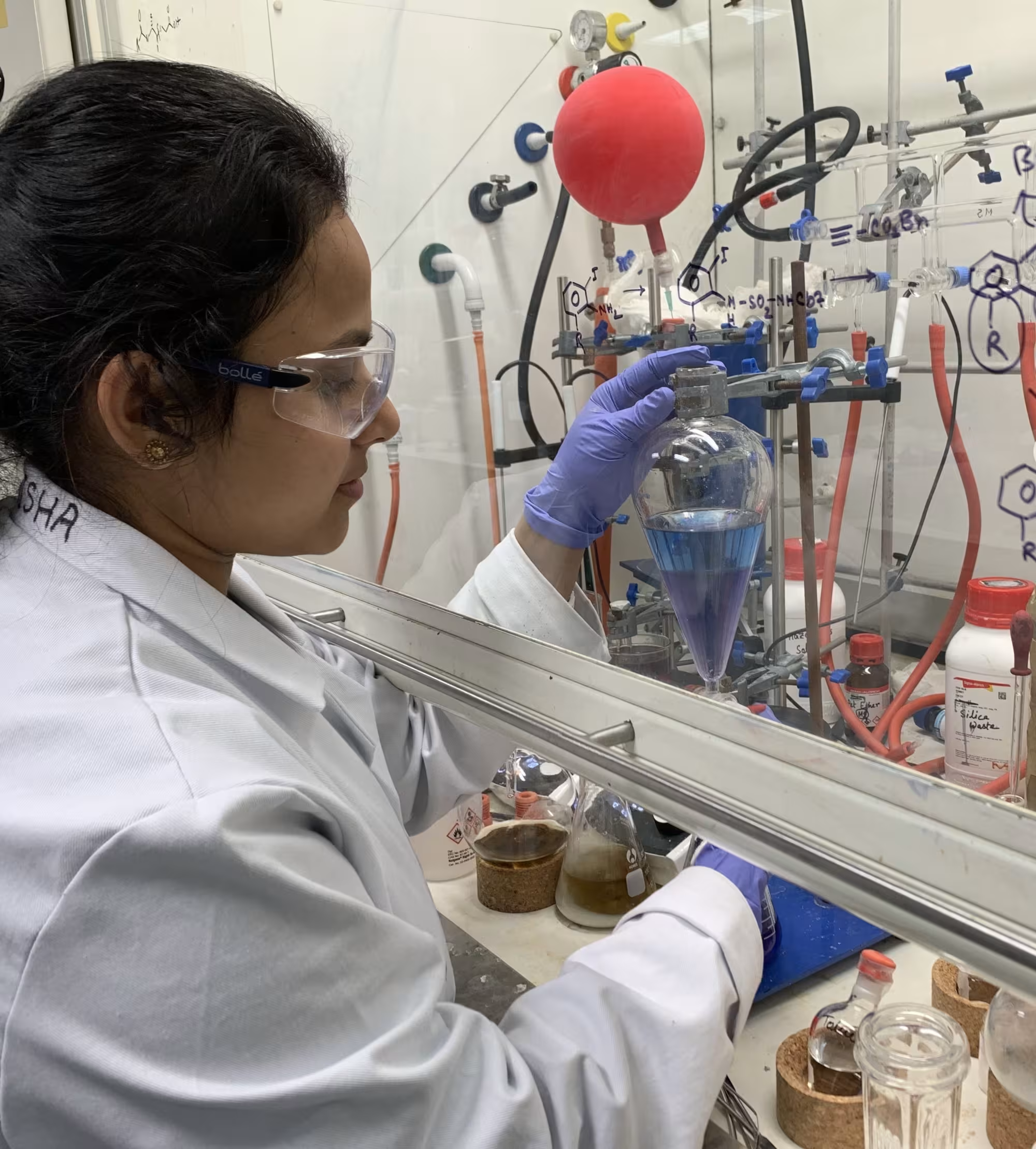
In a new study, published recently in the Journal of Medicinal Chemistry, IOI scientists describe new compounds called ‘pyrrole-2-carboxylic acids’ that trap water in bacterial enzymes called metallo-β-lactamases. Metallo-β-lactamases are enzymes that cause resistance in many bacteria, including those responsible for deadly hospital-acquired infections.
In 2023, one in six infections were resistant to antibiotic treatments, reflecting the growing threat of antimicrobial resistance (AMR). AMR occurs when microbes like bacteria, fungi or parasites stop responding to medicines designed to treat them.
Common antibiotics like penicillin are becoming ineffective in treating infections like pneumonia and gonorrhoea, leaving clinicians to rely on vital ‘last-resort’ drugs, often reserved for the most critical patients. Some of these last-resort antibiotics are part of a class called carbapenems.
However, resistant bacteria produce metallo-β-lactamases (MBLs) which break down antibiotics like carbapenems, leaving the drugs unable to treat infections.
“Antimicrobial resistance is a crisis that threatens the foundations of modern medicine, but there’s a serious lack of new classes of antibiotics coming through. Developing new drugs is expensive, time-consuming, and challenging research, and to compound this there is a limited commercial market for many new antibiotics once they have been approved. One very effective strategy is to develop new combinations of drugs which include an inhibitor that protects the antibiotic against resistance when treating serious bacterial infections. ”
Dr Alistair Farley added: 'It’s a long journey involving teams of collaborators to go from strong enzyme inhibition in the lab to the development of a compound that is safe and effective in humans. This work shows the importance of understanding the precise mechanism of action of new inhibitors; and whilst promising, these inhibitors need to undergo considerable further optimisation and studies prior to being used clinically.'
One step closer to clinical use
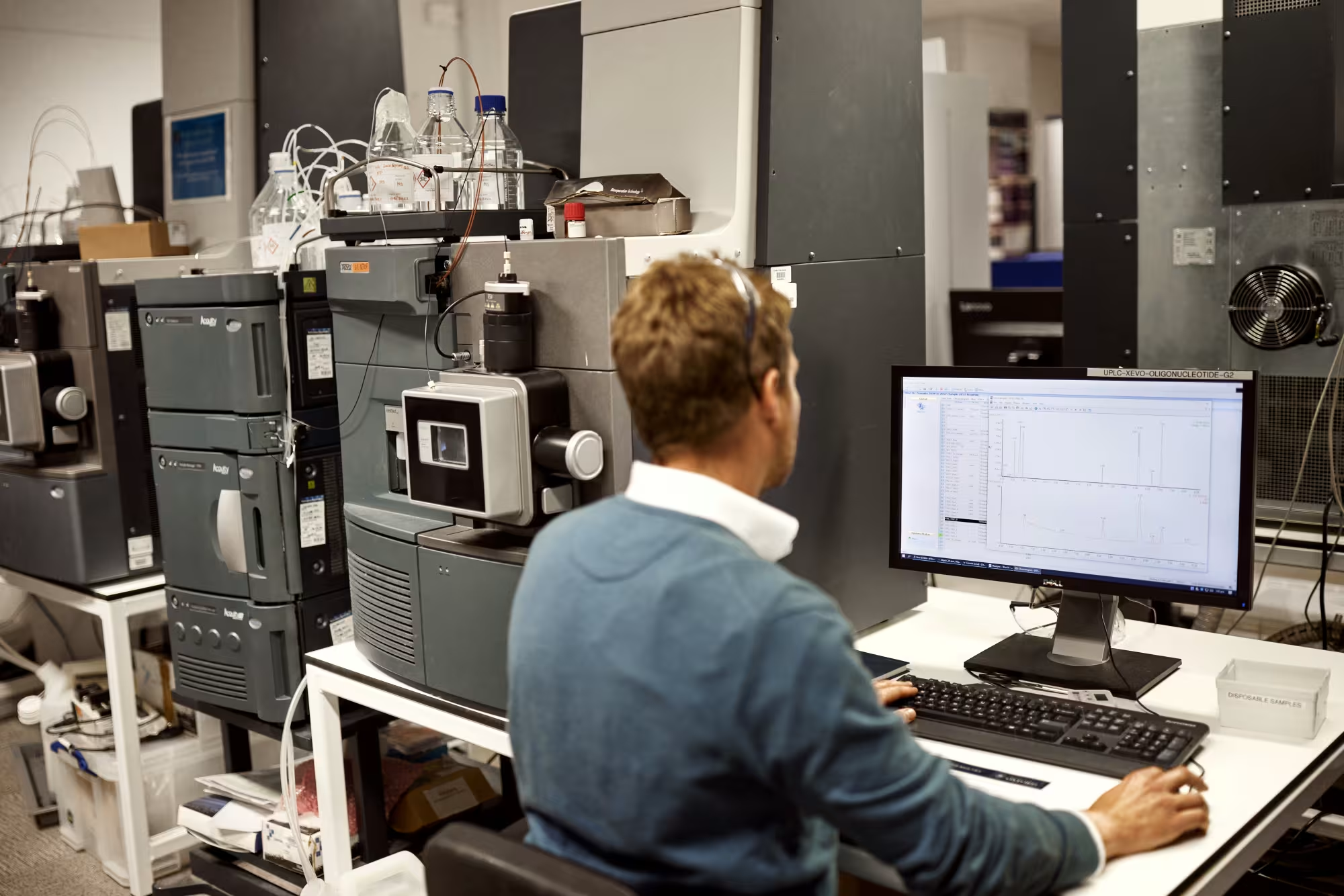
In the new study, researchers from Oxford University’s Departments of Chemistry and Biology developed pyrrole-2-carboxylic acids (PyCs) to block the ‘active site’ region of MBL enzymes. This prevents them from degrading carbapenem antibiotics. While PyCs have no antibiotic activity of their own, when used in combination with carbapenems, they can enhance the stability of these antibiotics in drug-resistant bacteria.
In laboratory tests, researchers found that PyCs could reduce the amount of carbapenem needed to achieve an antimicrobial effect by as much as 32-fold. The team tested the compounds against isolated enzymes, and live bacterial cells derived from clinical samples.
Tests against real-world bacterial isolates included strains from the ESKAPE group. These are a collection of six highly virulent, resistant and deadly bacterial strains responsible for the majority of hospital-acquired infections worldwide.
PyCs were not equally successful when tested against all of the clinical pathogens in this trial, but they showed promising activity against key strains like Escherichia coli and Klebsiella pneumoniae, where antibiotic doses could be reduced significantly.
Another significant finding of the study is that PyCs are more selective for bacterial enzymes over human-produced enzymes, which play important biological roles in the body.
A new way to block enzymes
This key difference between PyCs and most other MBL inhibitors is the specific way that they bind to enzymes. Using a process called crystallographic analysis, the team could study how the PyCs interact with the enzyme’s active site in detail to determine the mechanisms behind their action.
Many existing MBL inhibitors work by displacing a water molecule from the enzyme’s active site. However, scientists observed that PyCs appear to do the opposite: they trap the water molecule instead, which prevents the enzyme from bonding to antibiotics. Researchers suggest that this may be a better mechanism for discriminating between bacterial and human enzymes.
“Current research often focusses on inhibitors that bind to the metal ions at the active site of MBLs. Our research shows that it is possible to block the activity of MBLs by trapping the key water molecule in place and preventing the enzyme from degrading antibiotics. This approach may offer a promising route for the development of more selective MBL inhibitors.”
The team showed that the inhibitors were safe when tested against human cells, which is an important first step when assessing the safety profile of a new molecule. Importantly, the inhibitors showed good stability when evaluated in experiments in the lab, suggesting they may be appropriate to use in further preclinical development.
This research opens new opportunities for developing PyCs and other related inhibitors into clinically useful MBL inhibitors, as well as understanding how different binding modes can be used to develop selective inhibitors. The IOI is focused on developing innovative new drugs to combat AMR, and these findings may help guide future efforts to protect our most important antibiotics.
The study 'Development of Water-Trapping Pyrrole-2-carboxylic Acids as Broad-Spectrum Metallo-β-lactamase Inhibitors' has been published in the Journal of Medicinal Chemistry.
For more information about this story or republishing this content, please contact [email protected]


